Skip to content

Founder’s message / Takuya Tominaga

Both sides.Both are me.

Research awards, product development at Toshiba, and a secondment to the CDO office. Behind that career are hearing difficulties and paths I could not freely choose. Here is what I have built, and why I build.

Talk about your work

BEHIND THE CV / WHY I DO THIS WORK

Until I was ten, time stood still.

That is how I remember the years when I could not hear well. After surgery around fourth grade, I learned that sound had direction and distance.

I have never had a sense of smell. For me, eating a meal is just a task.

With hearing difficulties, I searched hard for what I could do and where I could go. Then I found software: things I built could work, and other people could use them. That experience opened new possibilities for me.

I could build a record of research and engineering achievements. But I cannot recover the time or the memories I might have made then. That is why I cannot accept people losing time to systems that could be changed.

Entering the same information again. Making people adapt to difficult systems. I want to change what can be changed with technology, so people have more time to choose—for research, customers, family, and their next challenge. I want to build technology and businesses from Japan that surprise the world. That is why I do this work at Leach.

CAREER / TAKUYA TOMINAGA

From researchto working products.

Evacuation research. Nine years at Toshiba. A secondment to an executive office. Then, a company of my own. Through every chapter, I kept building.

Explore selected work
  1. COLLEGE & GRADUATE SCHOOL

    Guiding people to safety with smartphone light.

    Studied at Kumamoto KOSEN and earned a master’s degree at NAIST. Research into evacuation guidance using smartphone light received the DICOMO 2014 Best Presentation and Excellent Paper awards, and the DPSWS 2014 Excellent Poster Award.

  2. STUDENT YEARS

    Learning to build inside startups.

    Interned at Akatsuki, Speee, and other companies, working on web and iOS applications. Won Speee’s advanced engineering internship competition.

  3. 2015 — 2024

    From HDD firmware to the cloud.

    Spent nine years at Toshiba, including its Software Engineering & Technology Center, developing web applications, HDD firmware, cloud infrastructure, data analytics platforms, and AI. Named inventor on patent JP 7086873, owned by Toshiba.

  4. 2022 — 2024

    Into the CDO office, seven years after joining.

    Fast, agile delivery earned an Excellence Award from Toshiba’s Software Engineering & Technology Center. Became the youngest employee seconded to Toshiba Tec’s CDO office, working with Google and cloud technologies.

  5. 2024 —

    Building a company to keep building.

    Founded Leach on November 13, 2024. Develops products including Totsugo.com, an AI document matching service—listening to people at work, choosing the technology, and turning it into a usable product.

SELECTED WORK

What I have helped build.

From Toshiba projects to Leach products and international hackathon teams.

LEACH / OUR PRODUCT

Totsugo.com

Let AI help compare the paperwork.

AI document matching for purchase orders, confirmations, and other business documents. Built around real document formats and review workflows, with people able to check the results.

Project and award details

2026 / BUILT WITH AN INTERNATIONAL TEAM

Origin

Multiple AI agents, applied to finance.

Designed and implemented financial AI agents with a four-person team formed at the event. Received an engineering award at c0mpiled-7, organized by Transpose Platform.

Project and award details

2026 / BUILT WITH AN INTERNATIONAL TEAM

MissionLingo

Practice Japanese by talking with AI.

A language app for conversations in everyday settings, from convenience stores to izakaya. Built in 48 hours by a three-person team; winner of the VoiceOS Award at Builders Weekend 2026 Tokyo.

Project and award details
At a Google Cloud workshop while seconded to Toshiba Tec.
At a Google Cloud workshop while seconded to Toshiba Tec. Photo: Google Cloud Blog

Rethinking cloud-based point of sale.

Worked with Google while in Toshiba Tec’s CDO office. The 2022 Tech Acceleration Program focused on reviewing the architecture of ELERA, Toshiba Tec’s cloud-based POS platform.

Read the Google Cloud article

RECOGNITION

The work. The recognition.

Research presentations, hands-on hackathons, and engineering recognition at Toshiba.

Certificate for the DICOMO 2014 Best Presentation Award

DICOMO 2014 Best Presentation Award

Presented research on using smartphone light for evacuation guidance in underground spaces. Also received the Excellent Paper Award.

Atsushi Tamura received the same Best Presentation Award at DICOMO in 2021.

Awards and technical credentials

2014

DPSWS 2014 Excellent Poster Award

Recognition for a presentation of distributed systems research.

2022

Toshiba Software Engineering & Technology Center Excellence Award

Recognized for fast, agile delivery on a Toshiba Tec development project.

2023

Second place, Toshiba AI Engineer Education, Session A

Program developed with the University of Tokyo. First recipient from the center.

2024

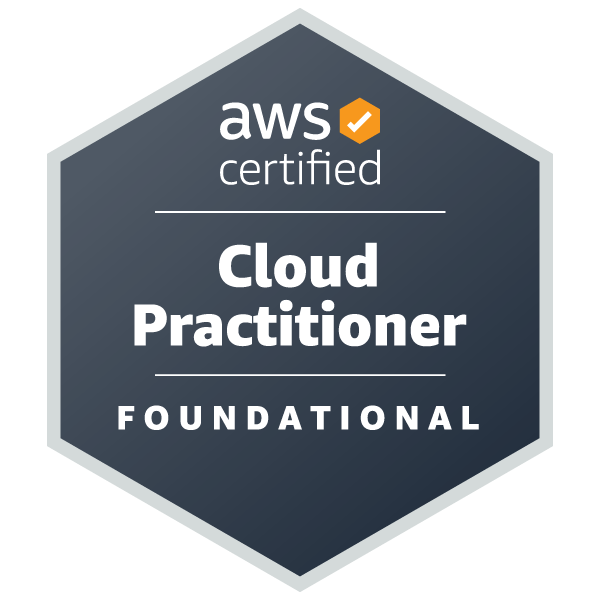
All 12 AWS certifications in approximately one month

Earned all 12 certifications available at the time, spanning architecture, security, analytics, and machine learning.

Read the recordInventor on patent JP 7086873 (owned by Toshiba)

All 12 AWS certifications available at the time, earned in about one month

Earned all 12 AWS certifications available at the time in about one month, spanning infrastructure, applications, security, data analytics and machine learning.

THE OTHER SIDE / BETWEEN THE LINES

A straight résumé. A life that was not so straight.

My hearing, paths I could not freely choose, and the way I changed how I work. These are the experiences between the lines of my CV, in my own words.

01 / Before fourth grade, and after surgery

What appears on the surface

Hearing difficulty in childhood, followed by surgery around fourth grade.

The other side

I could hear a sound. I could not locate it.

I needed the TV volume at roughly three times the setting other people used to hear it. Having a loud voice did not feel unusual to me. That was simply what normal meant in my world.

When someone called, I did not know which way to turn. I could not make out a car approaching from behind. After surgery, I became aware of sounds coming from in front and behind, near and far. It felt as though a flat world had gained depth.

Surgery did not end everything. My hearing still changed with the condition of my ears. In middle school, someone could call from a window and I would not know which window it was.

Read the full story on note (Japanese)

02 / Around fifteen / choosing a path

What appears on the surface

Studying at technical college and making programming a career.

The other side

I loved it. The choice was not entirely free.

Around fifteen, I rode my bicycle to a clinic alone. I was told I might lose my hearing in the future. I do not remember the doctor’s exact words. But the condition I used to consider careers changed: could I continue if I could no longer hear?

Pianist, football player, teacher. I began looking at the jobs I had considered through that condition. In football, I sometimes heard a teammate without knowing where the voice came from. Liking something could not be my only criterion.

I had already encountered programming before that visit. On the internet, words did not disappear when I missed them. I could pause and read again. It was a place I liked, and a path I thought I could keep following. Both were part of the choice.

Read the full story on note (Japanese)

03 / After founding Leach / rethinking work

What appears on the surface

Founding Leach and working on clients’ problems.

The other side

Writing more code was not enough to build a company.

For a time after founding Leach, I coded about seventeen hours a day. I kept going even when my eyes twitched. “Founded a company” looks like a milestone on a résumé. That is what some of the days behind it looked like.

One night on my way home, I was nearly hit by a car. That prompted me to rethink how I used my time. Continuing to work myself and helping the company grow could not keep being treated as the same thing.

Today, I limit meetings to four hours a day and leave space between appointments. I take time to rest and to design how the company can grow. Rather than following a straight line, I have repeatedly rebuilt places and ways of working that I could live with.

Read the full story on note (Japanese)

My body. A journey.

These things happened too, even though they do not appear on my CV.

1,350 km by bicycle.

I once rode 1,350 km by bicycle.

I passed out while I had the flu.

I once passed out while I had influenza. I was also told that apparently there was a hole in my lung.

A deep cut to my middle finger.

I have also had an injury that cut halfway into my middle finger.

Why I write openly

The past doesn’t disappear.

Living while hiding it is deeply painful.

No matter how much time passes, my past stays with me. That is why I share my story openly.

Sometimes a client would tell me I was different, and I would talk about my past. But saving the effort of explaining is not why I share it. Showing only what fits on a résumé while hiding what happened between those lines is painful.

There are failures, contradictions, and parts of myself I struggle to like. I do not intend to turn them into a tidy success story. Both sides belong to the same life. On note, I write about what I thought, feared, and chose along the way.

Takuya Tominaga

FOUNDER'S COMMITMENT

Why go this far?

People have ideas to explore, things to build and challenges they want to take on. Yet they spend their days accommodating awkward systems, entering the same information repeatedly and making up for the gaps through personal effort. What disappears is more than working time. It is an irreplaceable part of someone’s life—time in which they might have created something new. I cannot accept leaving that as it is. Where a system can change, we change it with technology. We are building Leach so people can use their experience and ingenuity in conversations with customers, in making things and in their next challenge.

Stay committed to the purpose. Stay flexible about the means.

We want people's time and energy to go toward new products, happier customers and the next challenge. We deliver results in one workplace and bring what works to the next. Together, we build what none of us could build alone. We are committing to a future where Japan keeps producing technologies and businesses that surprise the world.

Takuya Tominaga, CEO of Leach

The life behind the résumé

Start with these three stories.

My hearing, how I chose my work, and why I write about myself. These essays are a place to begin getting to know me. All articles are in Japanese.

Read more on note (Japanese)

Want to adopt AI but don't know where to start?

Start with a free consultation. We'll assess your operations and find the best path forward.